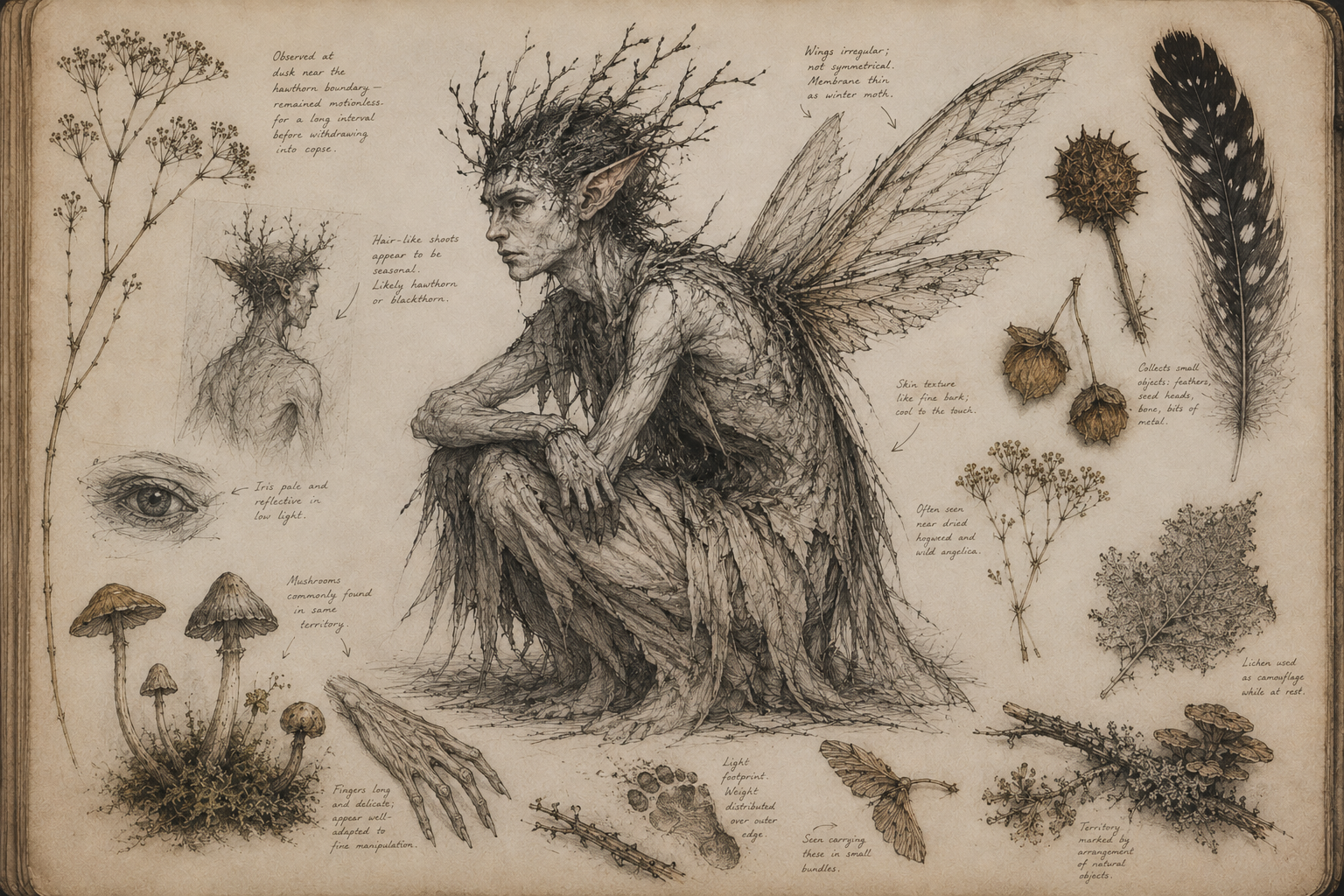
A prickly scholarly fantasy with dangerous faeries, dry humor, winter atmosphere, and a heroine who thinks her way through the strange.
Sometimes a book sits on your TBR pile for ages, quietly waiting to prove it was exactly your kind of story in a way you did not expect. Emily Wilde’s Encyclopaedia of Faeries was that book for me.
It won me over in small, precise ways at first: Emily dreading the thought of socializing with the neighbors, Wendell sending her a sketch of herself scowling at a typewriter, and the immediate sense that this was a heroine more comfortable with field notes than polite conversation.
Far Lantern Reader Snapshot
This book is best for:
Scholarly fantasy, folklore, dangerous faeries, competent heroines, dry humor, slow-burn romance, winter atmosphere, cozy elements with real stakes
This book’s emotional intensity:
Medium-low
Review spoiler level:
Spoiler-light. This review discusses premise, tone, character dynamics, and overall reading experience while avoiding major plot twists and ending details.
Reader note:
This is not pure cozy fantasy. The fae are genuinely strange and cruel, with the power to do real harm, and the story includes moments of peril. It is also written as Emily’s field journal, with scholarly observations and appendices, so readers looking for a fast-paced, action-first fantasy may find the structure slower. The danger, however, is balanced by Emily’s competence, dry humor, warm domestic moments, and an emotionally satisfying sense of containment.
Why Emily Works So Well
What makes Emily Wilde’s Encyclopaedia of Faeries work so well is the way it balances comfort and uncertainty. There is food, firelight, cabin comfort, village warmth, friendship, dry humor, and a slow, funny, non-steamy romantic thread. But the book never lets those comforts flatten the Folk into something safe or decorative. They remain unsettling enough to give the story teeth, while Emily’s research gives the reader something solid to hold onto.
Emily is not simply a woman who has read a lot of books. Her knowledge is usable. Her scholarship matters. Her field notes, observations, classifications, and remembered folklore are not decorative worldbuilding; they are the engine of the story.

Emily studies the Folk with the discipline of someone who has built an entire life around understanding what most people would rather avoid. She is not a strong heroine because she can fight her way out of danger. She is strong because she can think her way through it.
That is a particular pleasure in a fantasy heroine. Emily is a little older than some fantasy heroines, deeply studious, socially awkward, impatient, practical, and often more interested in what a situation can teach her than in how it makes everyone feel. She can be brusque. She can be oblivious. She can make mistakes. But I loved that the book never tried to sand her down into someone warmer, softer, or easier to like.
Instead, her growth is quiet and satisfying. She begins the book as someone who would much rather take notes than make friends, but the village slowly matters to her. The people slowly matter to her. She does not become effortlessly charming or emotionally fluent, and thank goodness for that. She learns to care in a way that still feels true to her character.
Emily grows, but the book never asks her to become someone else.
Why Wendell Makes the Story Warmer
And then there is Wendell.
The balance between Emily’s research-driven competence and Wendell’s comfort-making is the book’s strongest pleasure. Emily gives the story its intellectual spine; Wendell gives it warmth. He makes the cabin clean and cozy, brings ease where Emily brings intensity, and offers a form of protection that does not diminish her.
That last part matters. Wendell is not a traditional alpha protector who takes over the story or makes the heroine smaller. He protects Emily by creating sanctuary around her. He handles social situations she would rather avoid. He notices what she neglects. He repairs, tidies, arranges, and charms. But he also has enough edge under the fussiness to keep him from becoming merely decorative.
He is beautiful, ridiculous, vain, domestic, and far more powerful than he first appears.
Their romance works because it is just enough and not too much. It is not syrupy. It is not built out of grand sentimental speeches. It is banter, irritation, attention, academic rivalry, dry humor, and small moments that feel more romantic because Emily does not quite know what to do with them. Wendell’s outrageousness is perfect for her because he unsettles her tidy categories. He is not predictable enough for her to file away and move on from.
Why It Feels Strange but Manageable
A book with wonderfully dry humor is its own kind of joy — the kind that gives you those little hits of happiness as you read, when you realize more and more that the book may be very good indeed. The humor here is understated and perfectly placed. Emily’s practical observations, Wendell’s fussiness, and their argumentative rhythm give relief when the story darkens without turning the threat into a joke.
That balance is also why the book stayed emotionally manageable for me. The fae can do real harm. There are dark edges and frightening moments. But the story does not trap the reader in prolonged dread, helplessness, or frustration. Emily makes mistakes, but she does not spiral endlessly. She thinks, recalibrates, and keeps moving. Before the late-book tension rises, the story has already built a foundation of competence, problem-solving, dry humor, cozy interiors, hearty meals, strange little fae encounters, and trust.
I also loved the way the book uses its Edwardian flavor without feeling trapped by strict historical social expectations. It has the atmosphere of scholarly fieldwork, letters, notebooks, lectures, old books, and academic ambition, but the world has been adjusted enough to make room for Emily’s independence. That makes the setting more pleasurable rather than less. It gives the story an old-fashioned scholarly texture without requiring the heroine to be crushed under every historical restriction.
Who This Book Is For
This will not be the right book for every reader. If you need a warm, socially graceful heroine, Emily may frustrate you. If you want pure cozy fantasy, the fae may be too cruel and strange. If you dislike journal-style narration, field notes, appendices, or academic framing, the structure may not be your favorite. And if you need a fast, sweeping romance, this is quieter and more sideways than that.

But if you like prickly scholarly heroines, dry humor, folklore, cozy-but-dangerous settings, slow romantic tension, and competent women who solve problems by thinking their way through them, this is a wonderful read.
Emily Wilde’s Encyclopaedia of Faeries is scholarly fantasy with cozy elements: a prickly fae researcher makes an unsettling folklore world feel navigable, while one fussy, formidable, comfort-making fae man makes it warm enough to stay in.
One late-book decision from Emily frustrated me enough that this is not an entirely caveat-free favorite. But that frustration did not undo the pleasure of the book. By the end, I felt satisfied with this story and very ready for more Emily and Wendell.
Read next: Ilona Andrews’ Clean Sweep Review